
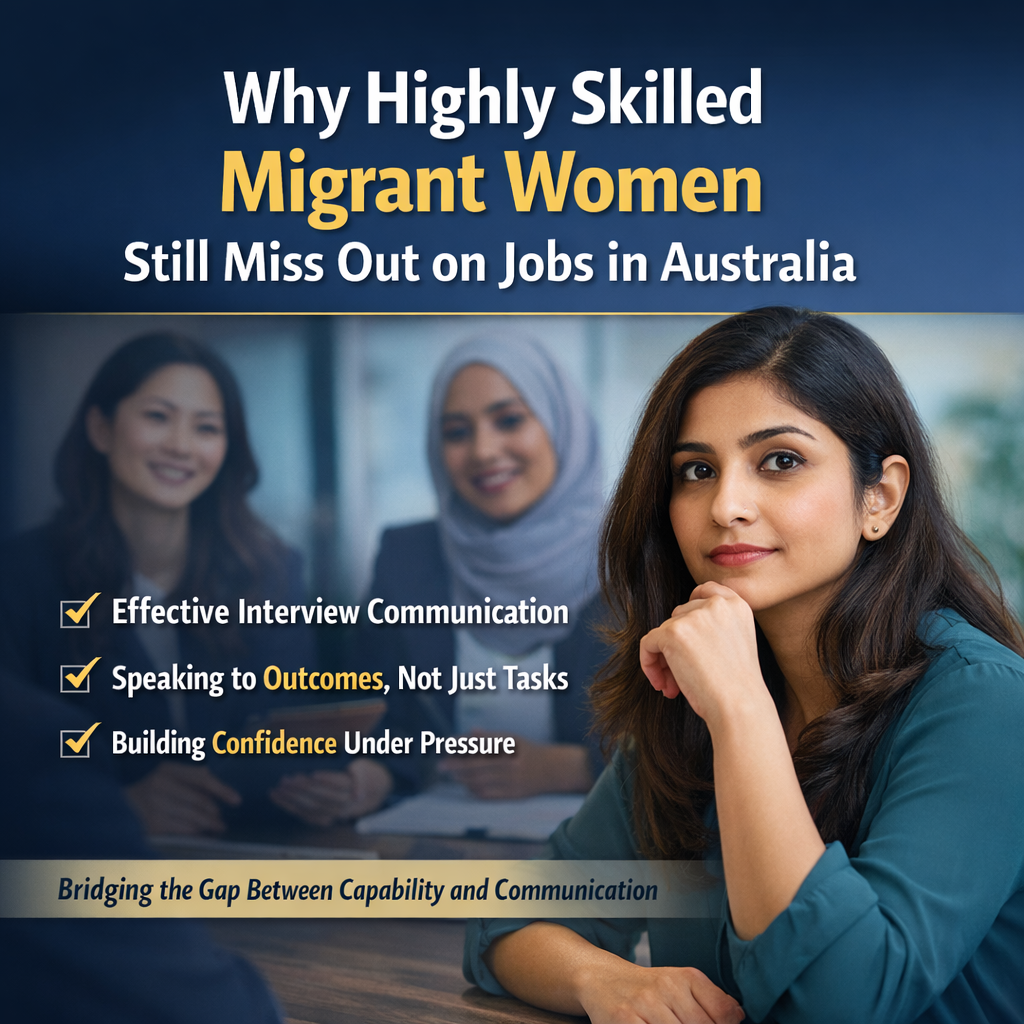
Many highly skilled migrant women are qualified, experienced, and capable, yet continue to face challenges when trying to secure roles in Australia.
From the outside, it can feel confusing. You meet the requirements, you have the experience, and yet the outcome does not reflect your capability.
Across recruitment processes in government and enterprise environments, a consistent pattern emerges.
The gap is often not technical ability. It is how experience is communicated and assessed within the Australian hiring context.
What employers are really assessing
Employers are not only evaluating what you have done. They are assessing how clearly you can explain your thinking, how directly you answer questions, and how confidently you present your experience under pressure.
For many migrant professionals, this can be unfamiliar. In some cultures, being modest is valued. In others, communication is more indirect or relationship-driven. In Australia, particularly in structured interview processes, clarity, structure, and directness are critical.
This is where strong candidates can be overlooked.
It is not about changing who you are. It is about understanding how to present your experience in a way that aligns with what employers are looking for.
Simple shifts can make a significant difference:
- Structuring your answers clearly and staying focused on the question
- Speaking to outcomes and impact, not just responsibilities
- Being comfortable articulating your value without hesitation
There is a growing pool of highly capable migrant women in the Australian workforce.
The real opportunity lies in ensuring that capability is recognised, not overlooked due to gaps in communication and positioning.
When that gap is addressed, outcomes change, for both candidates and the organisations hiring them.